What people say about Magene
Magene is a Chinese cycling technology company founded in 2015 (or 2017, depending on the source) that has grown rapidly to 700 employees and positions itself as a manufacturer of smart cycling products with strong in-house R&D and manufacturing. The company sells products in over 100 countries, though it has pulled back from US and European markets for some new products, focusing on China. Pricing is consistently described as competitive and undercutting established brands like Garmin and Wahoo. Magene has faced a notable quality issue with its QED groupset brakes, which it addressed through inspection requests and a free shifter upgrade that some riders characterized as a recall in all but name. The company has recently entered the WorldTour through a partnership with XDS Astana, which provides exposure and product development insights.
Pros
- Pricing is consistently described as competitive, significantly undercutting established brands like Garmin and Wahoo.123
- Strong in-house R&D and manufacturing capabilities, with design, testing, and production in the same building for faster iteration.4
- Products are sold in more than 100 countries and regions, with a global rebrand in 2026 to strengthen its professional image.5
- Magene has manufacturing relationships with major brands like Wahoo and Decathlon, indicating manufacturing competence.35
- The company offers a range of cycling technology products including power meters, carbon cranks, radar lights, and carbon fibre wheels.12
Cons
- Magene has pulled back from US and European markets for some new products, limiting availability outside China.3
- A 2025 QED brake failure incident led to a rider crash and broken leg; Magene's response included inspection requests and a free shifter upgrade that many riders called a recall in all but name.6
- Limited support infrastructure for Magene products in US/Europe compared to competitors.3
- Some products are not yet available in Western markets, and availability timelines have been unclear.73
- Concerns about potential patent infringement with some products, such as the P715 pedals resembling Favero Assioma pedals.38
Key Facts
- Founded in 2015 (according to Magene's own announcements) or 2017 (according to a video interview), with 700 employees as of 2024.54
- Headquartered in Qingdao, Shandong, China, with an Intelligent Manufacturing Industrial Park.45
- Spends nearly 50% of revenue on R&D annually and holds approximately 250 public patents.4
- Products are sold in more than 100 countries and regions.5
- Magene manufactures the Wahoo KICKR CORE for Wahoo and the Decathlon Van Rysel D100 for Decathlon.3
- Wahoo is a minority stakeholder in Magene.3
- Magene became an official partner of UCI WorldTour team XDS Astana in January 2026, supplying GPS bike computers, smart trainers, radar tail lights, and heart rate monitors.51
- The first QED groupset launched at ¥3,099 to ¥3,999 (about $435 to $560) and was sold only through dealers in China at launch.6
- Magene announced a global rebrand on October 21, 2026, with a new logo and visual system rolling out across more than 100 countries.5
- Magene's QED groupset is benchmarked against Shimano Ultegra.62
Magene factory tours & brand videos on YouTube
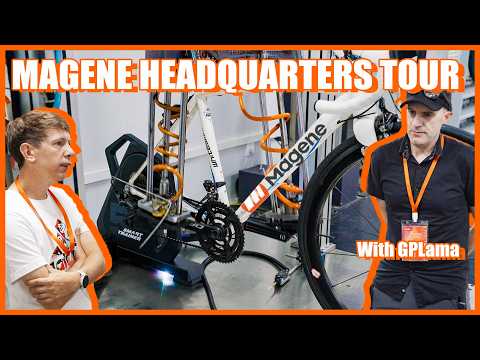
BIGGEST Smart Trainer Factory IN THE WORLD: Magene HQ Tour
November 06, 2024
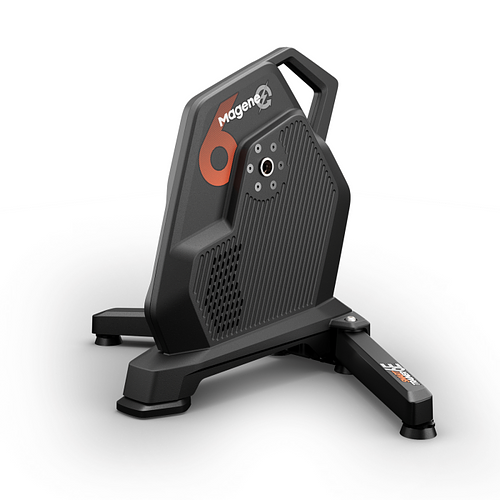
This video is a sponsored factory tour of Magene's new headquarters in Qingdao, China, showing their extensive production facilities for smart trainers, power meters, and electronic groupsets. It reveals Magene's significant manufacturing scale, with over 80% market share in China's smart trainer market and claims to be the largest cycling power equipment supplier globally. The tour highlights their automated production processes, rigorous testing standards, and in-house R&D capabilities.
Watch on YouTube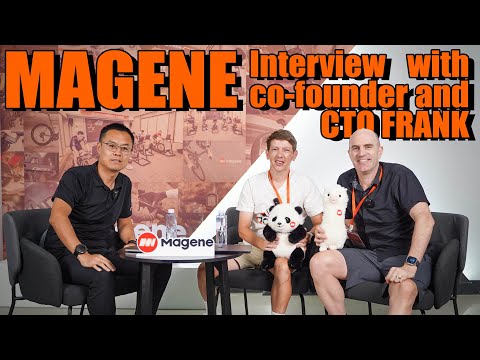
Interview with Magene Co-Founder & CTO; Frank
November 06, 2024
The video provides a behind-the-scenes tour of Magene's headquarters in Qingdao, China, featuring an interview with co-founder and CTO Frank. It reveals Magene's evolution from a 9-person startup to a 700-employee company focused on smart cycling products, with significant investment in R&D and manufacturing innovation.
Watch on YouTubeNews & Media Coverage for Magene


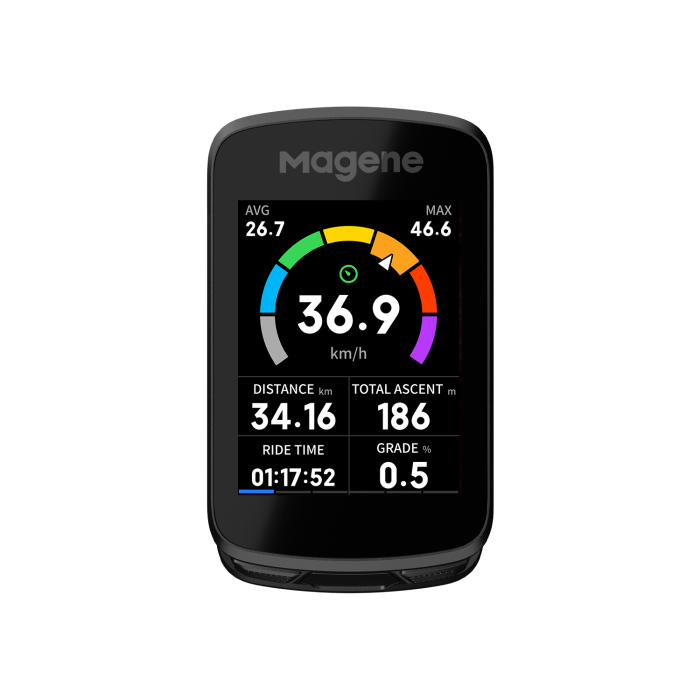



Bike part reviews of Magene
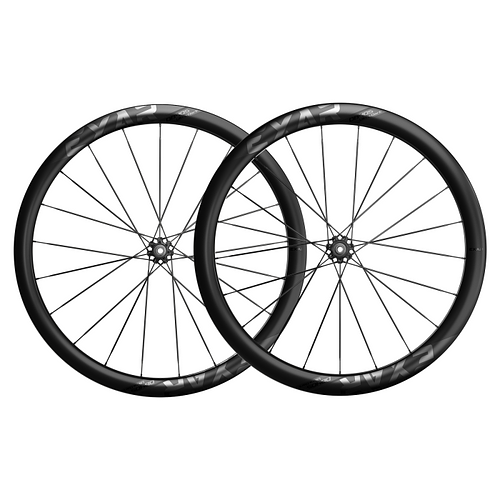
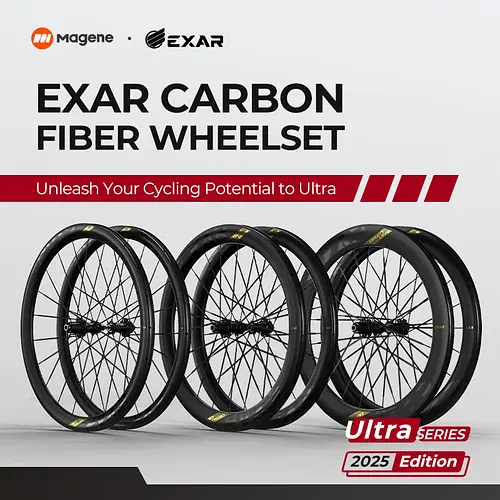
Wheels 2
Bike-Computers 4
| Name | Weight | Screen Size | Screen Type | Operation | Battery Life | Satellite Systems | Navigation | Connectivity | Mount Standard | Reviews | Price | Added | |
|---|---|---|---|---|---|---|---|---|---|---|---|---|---|
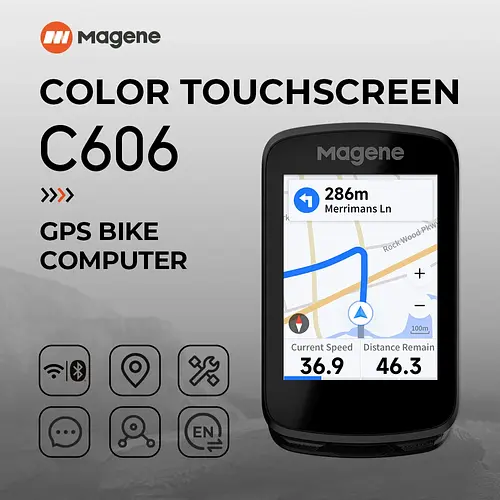 | 105g | 2.8" | Colour TFT / LCD | Touchscreen + buttons | 25 h | GPS, GLONASS, Galileo, BeiDou, QZSS | Offline maps, on-device routing | ANT+, Bluetooth, Wi-Fi | Garmin quarter-turn | 8 | $184.00 | 2y+ | |
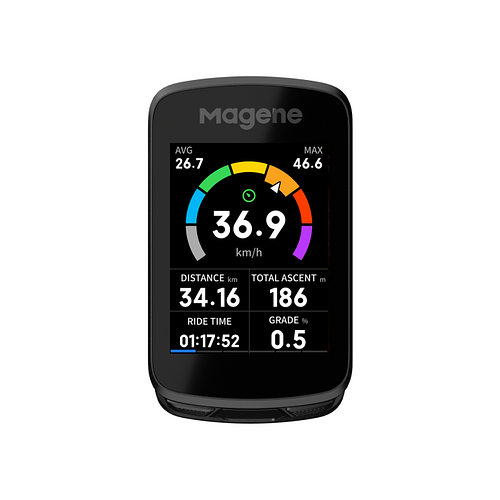 | 105g | 2.8" | Transflective colour | Touchscreen + buttons | 25 h | GPS, GLONASS, Galileo, BeiDou, QZSS | Offline maps, on-device routing | ANT+, Bluetooth, Wi-Fi | Garmin quarter-turn | 6 2 | €209.00 $199.00 | 8m | |
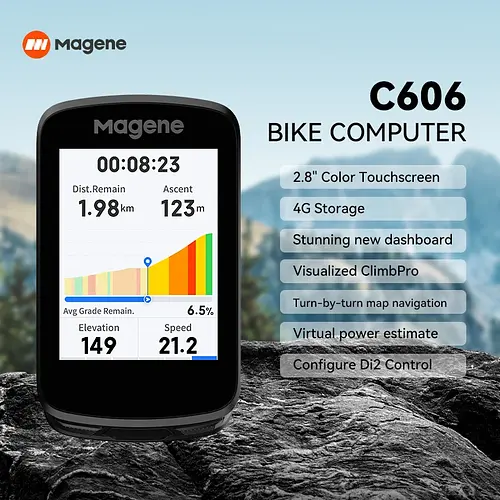 | 107g | 2.8" | Colour TFT / LCD | Touchscreen + buttons | 25 h | GPS, GLONASS, Galileo, BeiDou, QZSS | Offline maps, on-device routing | ANT+, Bluetooth, Wi-Fi | Garmin quarter-turn | 2 | €171.69 - €355.99 $159.00 | 10m | |
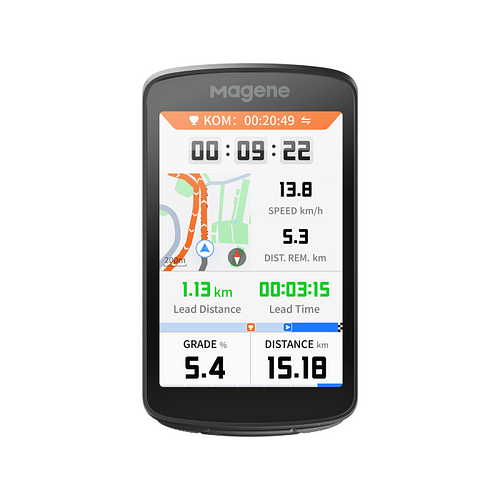 | 111g | 3.3" | Colour TFT / LCD | Touchscreen + buttons | 25 h | GPS, GLONASS, Galileo, BeiDou, QZSS, Dual-band (L1+L5) | Offline maps, on-device routing | ANT+, Bluetooth, Wi-Fi | Garmin quarter-turn | 7 1 | €239.00 | 7m |
Heart Rate Monitors 4
| Name | Weight | Reviews | Price | Added | |
|---|---|---|---|---|---|
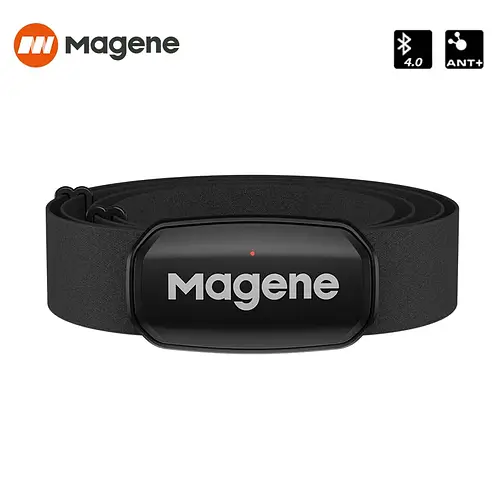 | 16g | 4 | €18.99 - €21.59 $17.26 | 2y+ | |
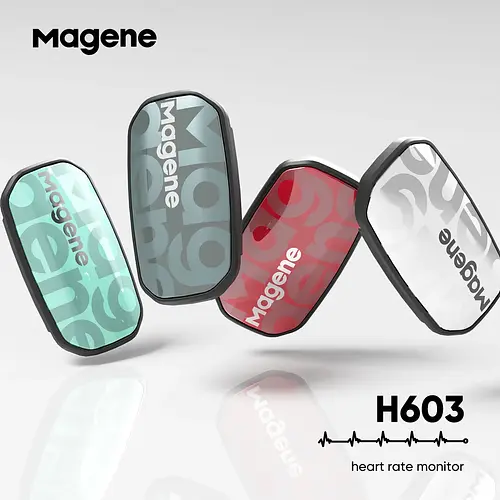 | 1 | €34.79 $48.15 | 2y+ | ||
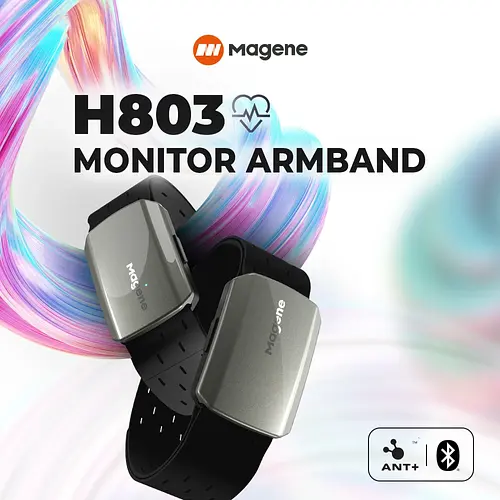 | 1 | €48.99 $49.90 | 2y+ | ||
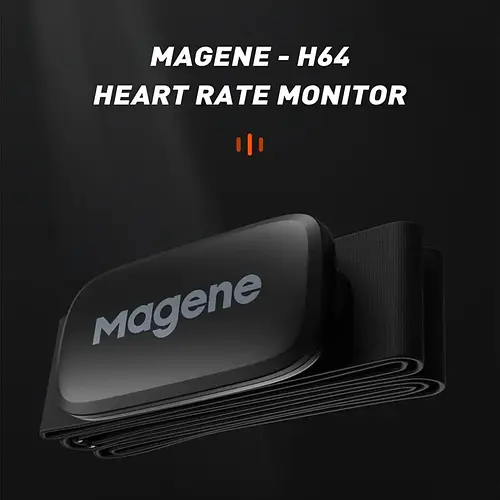 | 1 | €18.19 $22.37 | 1y+ |
Radar 1
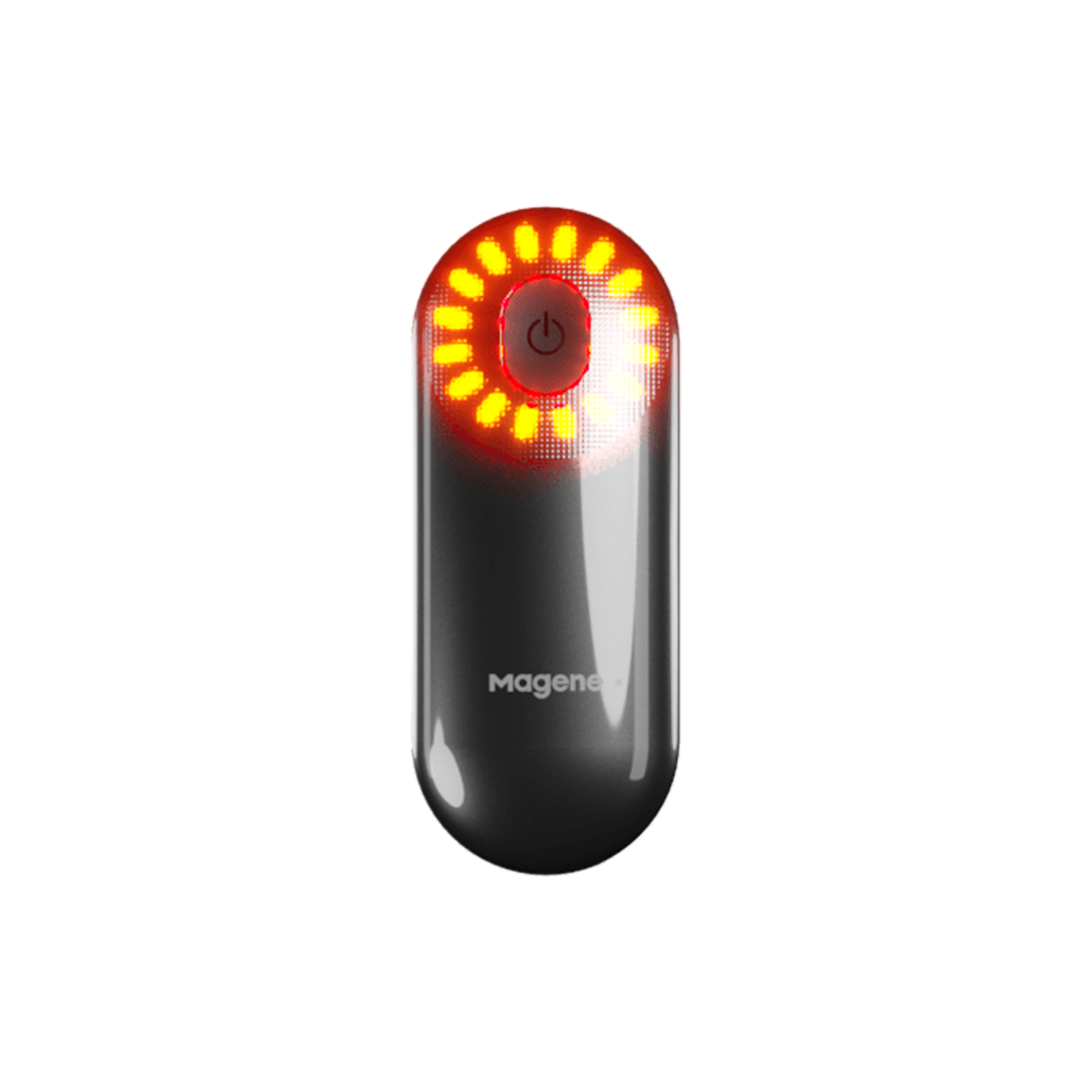
Powermeter 8
| Name | Weight | Sold as | Sensor location | Sidedness | Claimed Accuracy (± %) | Battery Life | Connectivity | Mount / Interface | Compatibility | Reviews | Price | Added | |
|---|---|---|---|---|---|---|---|---|---|---|---|---|---|
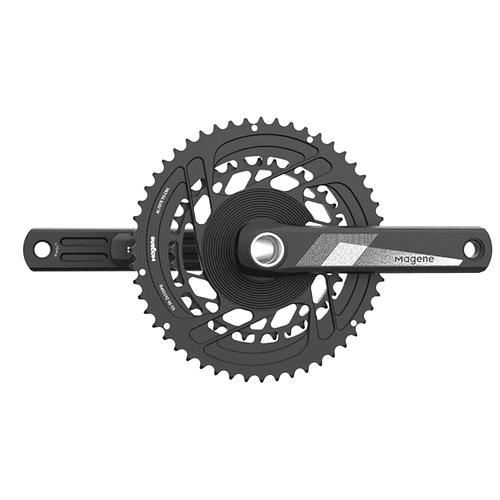 | 760g | Complete crankset | Crank arms (both sides) | Dual-sided (true left/right) | ANT+, Bluetooth | DUB spindle | $480.00 | 7m | |||||
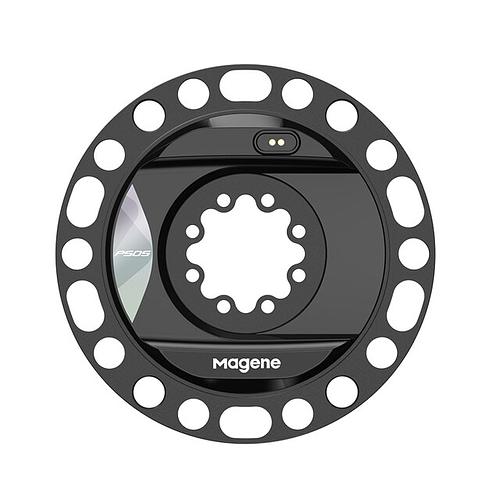 | 120g | Sensor only (no cranks) | Spider | Total power (both legs combined) | 1 | 200 h | ANT+, Bluetooth | 110BCD 4-bolt / 5-bolt | $349.00 | 7m | |||
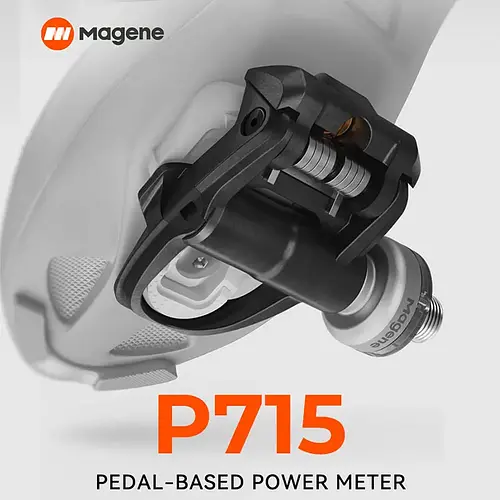 | 314g | Pedal pair | Pedal | Dual-sided (true left/right) | 1 | 120 h | ANT+, Bluetooth | Look KEO or Shimano SPD-SL | 5 1 | $499.00 | 1y+ | ||
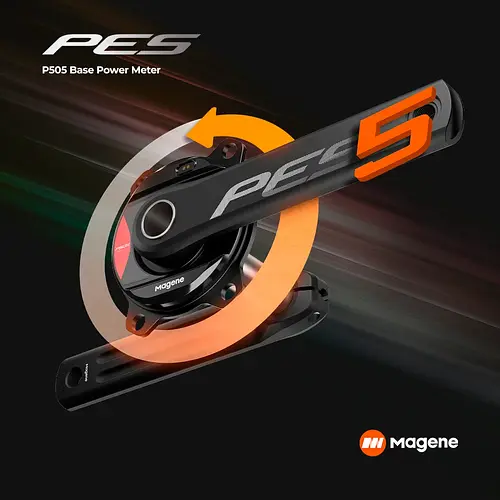 | 650g | Complete crankset | Spider | Total power (both legs combined) | 1.5 | 200 h | ANT+, Bluetooth | 110BCD 4-bolt, 24mm spindle | Shimano 105 R7100, SRAM 3-bolt, etc. | 2 1 | $359.00 | 1y+ | |
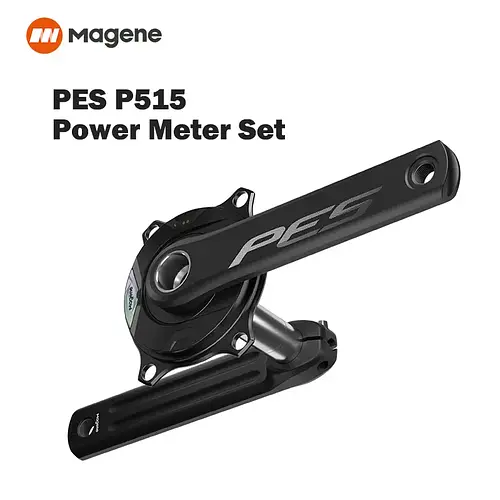 | 625g | Complete crankset | Spider | Total power (both legs combined) | 1 | 240 h | ANT+, Bluetooth | 110BCD 4-bolt, 24mm spindle | T47 68/86, BB386 (with spacers) | 2 9 2 1 | €269.00 $299.00 - $370.00 | 1y+ | |
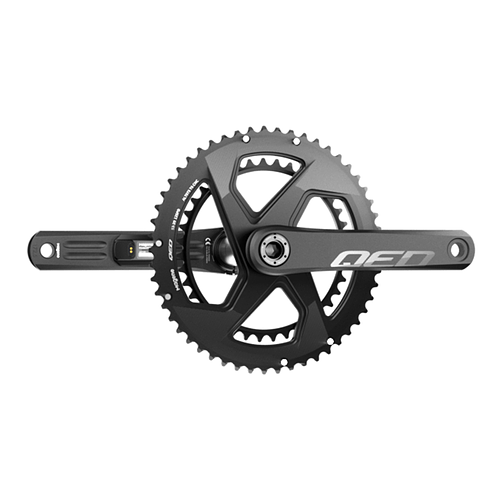 | 698g | Complete crankset | Crank arms (both sides) | Dual-sided (true left/right) | ANT+, Bluetooth | DUB spindle | $469.00 | 7m | |||||
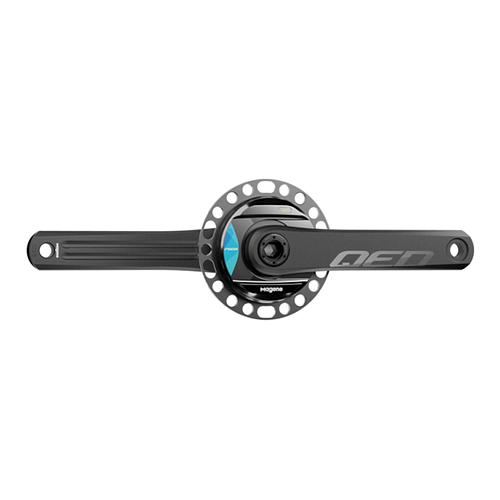 | 618g | Complete crankset | Spider | Total power (both legs combined) | 1.5 | 200 h | ANT+, Bluetooth | 110BCD 4-bolt/5-bolt, DUB spindle | $449.00 | 7m | |||
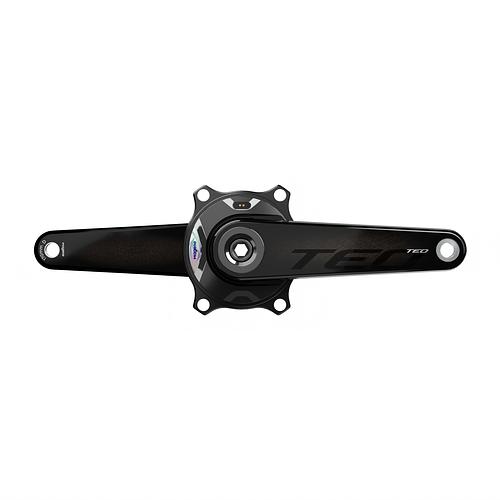 | 425g | Complete crankset | Spider | Total power (both legs combined) | 1 | 330 h | ANT+, Bluetooth | 110BCD 4-bolt, 29mm spindle | 1 4 | $549.00 - $695.00 | 7m |
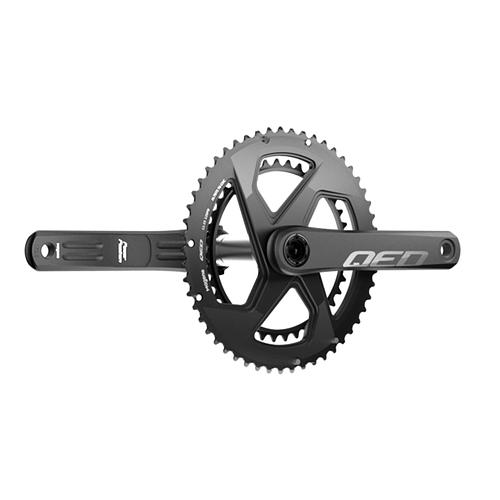
Crank 1
Smart-Trainer 2

Lights 1