


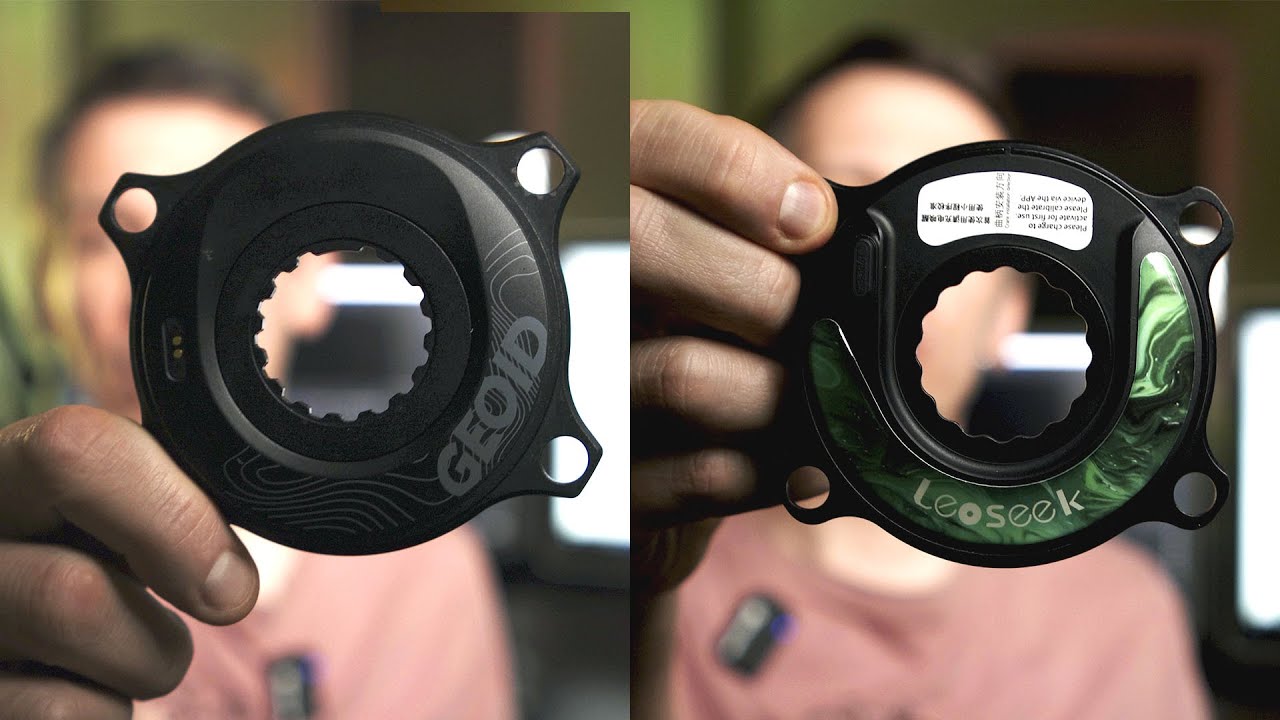
The GEOID PM500 is a budget-friendly spider-based power meter that offers good accuracy for the price, often compared to Magene P505/P515. It is praised for its value, ease of installation, and compatibility with Shimano systems, but has notable drawbacks including higher weight, proprietary crank interface, and some reported accuracy and reliability issues.
Pros
- Accurate power readings in most tests, close to Garmin Rally pedals and direct drive trainers.123
- Very affordable compared to similar power meters, often 2/3 the price of Magene P515.456
- Easy to install, similar to Shimano cranks, includes tools and charger.413
- Compatible with major cycling apps and computers (Garmin, Wahoo, Zwift, etc.) via ANT+/Bluetooth.56
- Long battery life (300 hours) and IP67 waterproof rating.45
- No offset shift after high-power sprints in some tests (unlike some cheap meters).13
- Works well with Shimano 105 chainrings and shifts perfectly.6
- Senicx PR3 crank arms provide more clearance for front derailleurs than Magene PES505 arms.6
Cons
- Heavier than comparable cranksets (680g vs 545g for Shimano 105).12
- Cranks are not sold separately, so changing crank length requires buying a new set.1
- Proprietary crank interface limits compatibility with other crank arms.6
- Some units have reported power accuracy issues (-2-3% vs trainer) and calibration difficulties with certain devices (Coros Dura, Garmin Edge 800).6
- Some units have failed completely, showing 0W while cadence still works; calibration fails.6
- Chainline may be tighter than Magene PES505, potentially causing chainstay clearance issues with 2x setups.6
- Power scaling (slope adjustment) does not work, confirmed by support.3
- Chainring not included, and chainring bolts not included.4
Key Facts
- Claimed accuracy ±1.5%, but user tests show -2-3% deviation vs smart trainers in some cases.162
- Weight: 680g (complete set), heavier than Shimano 105 cranks (545g).1562
- Spider-based power meter with 4-bolt 110BCD, 24mm spindle, compatible with Shimano bottom brackets.4562
- Price range: $170-$250, often around £165 or $179.456
- Battery life: 300 hours, IP67 waterproof, magnetic charging cable.415
- Uses accelerometer for cadence, not Hall-effect sensor.1
- Crank interface is proprietary, paired with Senicx PR3 cranks; not compatible with other crank arms.6
- Chainline is ~3mm shorter than Magene PES505, may cause chainstay clearance issues in 2x setups.6
Sources
- 1Веломастерская love.bikeМощемеры ПО НИЗУ РЫНКА: Geoid PM500, Leoseek
- 2r/bicyclinggeoid pm500 vs direct drive trainer power
- 3r/bicyclinggeoid pm500 vs tacx neo 2t test
- 4Dave NoakesThe BEST Budget Power Meter?! Geoid PM500 Installation - AliExpress

- 5Crank & SprintsIs Commuting Making You A Faster Cyclist? We Tested It With GEOID PM500

- 6ChinertownGeoid PM500 power meter
Reviews & Ratings
08:30The reviewer discusses the GEOID PM500 cycling power meter as an affordable entry-level option for cyclists who want consistent and reliable power data. They highlight its compatibility with Shimano 105 11-speed systems, lightweight design, long battery life, and accuracy of ±1.5%. The reviewer emphasizes that at $179, it provides meaningful data without the need for expensive alternatives.
14:42The reviewer tests the GEOID PM500 cycling power meter, which comes with cranks. They compare it to a cheaper spider-based power meter (Leico) and find the GEOID PM500 to be more accurate and reliable, especially after high-power sprints. The reviewer recommends the GEOID PM500 for its accuracy and value, noting it is a good option for those who need a power meter on a budget.
08:01The reviewer purchased the GEOID PM500 power meter set from AliExpress for about £165. It is a crank set with a direct mount spider power meter, not including a chainring. The reviewer finds it affordable, easy to install, and aesthetically pleasing. They tested it and confirmed it pairs with devices and provides power readings.
The GEOID PM500 cycling power meter is a budget-friendly option that appears to be a rebranded Magene P505 or P515 spider-based power meter. User tests show accuracy comparable to Garmin Rally pedals and direct drive trainers, but some concerns exist about potential offset shifts after high-power efforts, though not confirmed for this model. It is heavier than standard cranksets but offers good value for a second bike.
AI Summary
Pros
- Accuracy close to Garmin Rally pedals and direct drive trainers
- Significantly cheaper than Magene P515 (about 2/3 the price)
- Compatible with Shimano 4-bolt 110BCD cranksets
more pros in the review
Cons
- Heavier (680g) compared to standard 105 crank (545g)
- Potential offset shift after sprints (not confirmed for this model but seen in similar cheap meters)
- Limited long-term reliability data
Key Points
- Spider-based power meter, 4-bolt 110BCD, 24mm spindle
- Rebranded Magene P505 or P515
- Weight: 680g
more key points in the review
A Reddit user tested the Geoid PM500 power meter against a Tacx Neo 2T trainer and found it tracks well overall, with no offset issues after high-power efforts. It appears more responsive than the trainer but showed some cadence drops and a power drop without cadence change. Installation is straightforward, similar to Shimano cranks. However, a commenter noted the power scaling feature does not work, which is a drawback for users needing calibration.
AI Summary
Pros
- Tracks Tacx Neo 2T accurately overall
- No offset problems after 1000+ watt efforts
- More responsive to sudden power increases than the trainer
more pros in the review
Cons
- Power scaling (slope adjustment) does not work, confirmed by support
- Some cadence drops observed (possibly glitches)
- One unexplained power drop without cadence change
Key Points
- Spider-based power meter, 4-bolt 110BCD, 24mm spindle
- Compatible with Shimano direct drive (MTB) interface
- Tested against Tacx Neo 2T with 2-second offset and 1-second smoothing
more key points in the review
The GEOID PM500 is a spider-based power meter with 4-bolt 110BCD 24mm interface, widely discussed as a rebranded or similar version of the Magene P505/P515. Users report it's typically priced between $170-$250, with weights around 668-680g including cranks. It uses a proprietary crank interface (paired with Senicx PR3 cranks) that is not compatible with other crank arms. The Senicx PR3 arms are more outward curved than Magene PES505, offering better front derailleur clearance, but the chainline is about 3mm shorter, which may cause chainstay clearance issues in some 2x setups. The power meter features ANT+/Bluetooth connectivity, claims ±1.5% accuracy, and works with Magene app and major cycling computers. User experiences on accuracy are mixed: some report good correlation after calibration, while others see -2-3% deviation vs smart trainers or encounter calibration difficulties with certain devices (Coros Dura, older Garmin). Some units have experienced a complete failure showing 0W while cadence still works; a possible fix is calibrating with a different head unit (e.g., iGPSport i830). No app activation is required, which is a plus over some Magene products. It is widely used in 1x setups. Overall, it is considered a budget-friendly alternative to Magene's offerings, often 2/3 the price in China, and a good value if performance is acceptable.
AI Summary
Pros
- Good value for money compared to similar power meters like Magene P515
- Compatible with major cycling apps and computers (Garmin, Wahoo, Magene, etc.) via ANT+/Bluetooth
- Uses improved 4-bolt clamping system compared to Magene's single-bolt design
more pros in the review
Cons
- Heavier than comparable models (approximately 680g vs 625g for Magene P515)
- Proprietary crank interface limits compatibility with other crank arms
- Potential chainring compatibility issues requiring shims
more cons in the review
Key Points
- Price range: $170-$250 (often ~$171 on Amazon, ~1000 RMB in China)
- Weight: 668-680g with cranks
- Accuracy: ±1.5% claimed, some users report -2-3% vs trainer
more key points in the review
Where to Buy
GEOID PM500 Bike Power Meter Crankset | ±1.5% Accuracy
GEOID PM500 Bike Power Meter Crankset | ±1.5% Accuracy

GEOID PM500 Road Bike Power Meter 110BCD 4-Bolt Crank ANT+ Bluetooth 24mm Spindle Compatible with Shimano


GEOID PM500 Cycling Bike Spider-Based Power Meter 4Bolt 110BCD 24mm Spindle Bicycle Crankarm for Shimano
GEOID PM500 Leistungsmesser für Rennräder - Kurbelsatz Leichtbau 680g mit Präzision ±1,5%, Akku 300 Stunden, 110 BCD, Bluetooth/ANT+, IPX7 Wasserdicht

Specifications
Attributes
Spotted an error in the specs? Help us correct it — sign in or create an account.
Questions about GEOID PM500 Power Meter Crankset
Price & value
1Compatibility
6Ride & performance
3Durability & quality
1Sign up and share your experience — help other riders decide!
Create Account & Review