

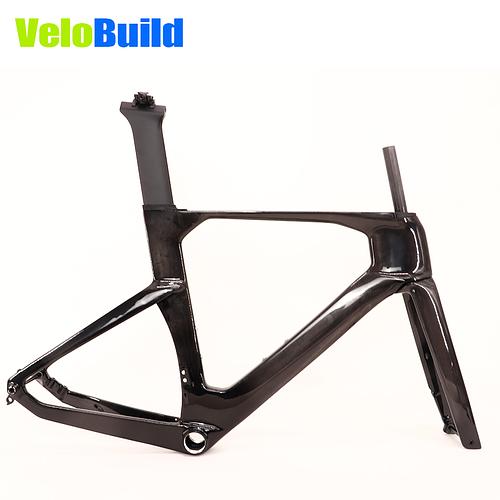

The frame offers aggressive aero geometry and good ride comfort at a competitive price, but is plagued by widespread quality control issues including seatpost slippage, poor brake mount facing, and variable actual weight significantly higher than quoted.
Pros
- Aggressive, forward-leaning geometry with steep seat tube angle and long reach enables aero position
- Unique, bold aero design with deep tube sections that many find visually appealing
- Surprisingly comfortable ride quality with good vibration damping
- Good value for money compared to Western aero frames with similar geometry
Cons
- Widespread issue with seatpost slipping, even at high torque (8-10 Nm vs specified 5.2-5.6 Nm)
- Poorly faced disc brake caliper mounts, leading to disc rub requiring washers for mitigation
- Design flaw where rear derailleur hits chainstay when in smallest (10-tooth) cog, affecting SRAM groupsets
- Variable and often poor build quality including paint overspray, rough threads, poor facing, and loose tolerances
Key Facts
- Material: T800 Carbon Fiber
- Quoted frame weight: ~1100g (size M)
- Actual frame weight: 1300-1500g+ depending on size and finish
Reviews & Ratings
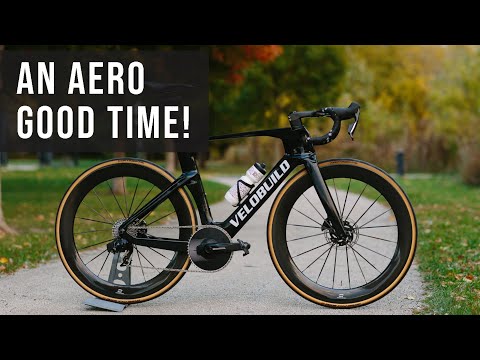
The reviewer builds and tests the Velobuild Aerotrace 368 frame in a size medium. They are impressed with the visual appearance and overall stiffness of the frame, noting it soaks up micro-vibrations well. However, they report several issues: significant seat post slippage requiring higher-than-specified torque, poorly faced disc brake caliper mounts leading to disc rub that required creative fixes with washers, a design flaw where the rear derailleur hits the chainstay in the smallest cog, and a shorter-than-expected effective top tube length which required significant saddle adjustment. The frame is described as intended for fast, flat races and solo efforts, but not ideal for climbers or lighter riders.
AI Summary
Pros
- Visually impressive and insane looking
- Frame is stiff and rigid
- Surprisingly not as punishing as expected, soaks up micro-vibrations
- Bearings were tight with no loose headset play
- No issues threading cables through the bottom bracket
Cons
- Seat post slippage occurs even at higher torque (8-9 Nm) than the specified 5.2-5.6 Nm
- Poorly faced disc brake caliper mounts, leading to disc rub
- Required installation of washers on the calipers to mitigate disc rub
- Design flaw: rear derailleur hits the chainstay when in the smallest (10-tooth) cog
- Shorter effective top tube length than expected for the size, requiring the saddle to be pushed all the way back
- Not ideal for climbers or super light riders
- Can feel sketchy in sudden gusts of crosswinds
Key Points
- Frame model: Velobuild Aerotrace 368
- Size tested: Medium
- Seat post angle: 72 degrees
- Torque spec for seat post: 5.2-5.6 Nm (but reviewer needed 8-10 Nm to prevent slippage)
- Intended for fast racing, solo efforts, TT races, and fast group rides on flats
- Not intended for everyday long zone 2 rides, breezy mountain descents, climbers, or lighter riders
- Effective top tube is about 12mm shorter than a Scott Foil RC Pro
The Velobuild 2026 VB-R-368 AeroTrace Frame is a Chinese direct-to-consumer aero road bike frame characterized by its deep, chunky tube profiles, aggressive geometry, and TT-like aesthetic. It uses T800 carbon fiber, with a quoted frame weight of around 1100g for a medium size, though actual user reports show weights significantly higher, often 1300-1500g depending on size and finish. It features a T47 bottom bracket, UDH (Universal Derailleur Hanger) standard, and clearance for up to 32c tires. The geometry is described as progressive, with a steep seat tube angle and long reach in larger sizes, aiming for a forward, aero riding position. The frame includes a proprietary headset system that requires specific spacers or 3D-printed adapters for most cockpits, and it comes with a thick, TT-style seatpost with an adjustable fore/aft clamp.
AI Summary
Pros
- Aggressive, forward-leaning geometry with steep seat tube angle and long reach (especially in larger sizes) is praised for enabling an aero position.
- Unique, bold aero design with deep tube sections that many users find visually appealing and 'fast-looking'.
- Surprisingly comfortable ride quality, with the deep carbon tubes providing good vibration damping.
- Good value for money compared to Western aero frames with similar aggressive geometry.
- VeloBuild provides good customer support, offering custom 3D-printed headset covers for different cockpit standards (e.g., FSA ACR) and addressing issues.
Cons
- Frame weight is significantly higher than quoted; real-world weights are often 1300-1500g+, making it heavy for an aero frame.
- Proprietary headset and spacer system is awkward, limits cockpit options, and the implementation (especially early spacers) is criticized as ugly or poorly designed.
- Widespread issue with seatpost slipping, even at high torque, requiring fixes like grip tape, epoxy, or shims.
- Early production frames had a design flaw where the SRAM rear derailleur cage would hit the chainstay, requiring B-screw adjustment and affecting shifting.
- Variable and often poor build quality: issues include paint overspray on critical surfaces (brake mounts, BB), rough threads, poor facing, and loose tolerances.
- Long and uncertain delivery times, with frequent delays and lack of communication during the waiting period.
Key Points
- Material: T800 Carbon Fiber (T1000 mix planned for future)
- Quoted Frame Weight: ~1100g (M) - Actual often 1300-1500g+
- Bottom Bracket: T47
- Derailleur Hanger: UDH (Universal Derailleur Hanger)
- Tire Clearance: Up to 32c (fits ~35mm measured)
- Geometry: Aggressive, progressive with steep STA and long reach in larger sizes
- Headset: Proprietary system requiring specific spacers/adapters
- Seatpost: Thick, TT-style post with adjustable fore/aft saddle clamp
Where to Buy
Velobuild 2026 VB-R-368 AeroTrace Carbon Fiber Aero Road Bike Frame Disc Brake
Specifications
Attributes
Included Components
Spotted an error in the specs? Help us correct it — sign in or create an account.
Questions about Velobuild VB-R-368
Sign up and share your experience — help other riders decide!
Create Account & Review