
BUCKLOS Anti-Slip Racing Handlebar Tape
Bar-Tape
The reviewer wraps the handlebar tape (Lenkerband) as the final step of the second part of his gravel bike build. He deliberately avoids giving a detailed tutorial because there are many different opinions on the correct wrapping method, and instead shows the process in a timelapse before revealing the result. He admits he follows a tutorial alongside and is not overly concerned with perfection, and he notes the finished wrap looks somewhat improvised.
AI Summary
Pros
- The silver spot on the bar is no longer visible after wrapping
Cons
- The reviewer cut the tape the wrong way round
- The insulating tape included with the product is not optimal
- His own roll of insulating tape was empty so he had to get more
more cons in the video
Key Points
- Bar tape is the last remaining step before the second part of the build series is complete
- The reviewer intentionally skips a detailed wrapping tutorial due to the many conflicting methods and opinions
- The wrapping is shown in a timelapse followed by the final result
more key points in the video

KMC Waxed Series 11/12 Speed Semi-Hollow Chain
ChainThe reviewer installs a new waxed KMC chain, which comes with 128 links in new condition. He calculates that he needs 112 links for his derailleur, so he removes 16 links. He uses the Wheeltop method of wrapping the chain around the largest cassette cog and the front chainring, pulling it taut, and removing the overlapping section, which came to eight links top and bottom (16 total). He notes he has never shortened a chain himself before and previously always held the old chain against the new one. He uses a chain tool, noting the one in his Lidl tool set did not work and he used another one. He makes sure to break the chain at an outer pin so a quick link can be reinserted. After fitting the chain with a quick link, he discovers he cut the chain too short, as he could not shift onto the largest cog (smallest gear). To lengthen it, he inserts a piece of the cut-off chain at the quick link location and adds a second quick link, which he says works without problems, and the chain is now the correct length. He then proceeds to fine-tune the shifting via the app.
AI Summary
Pros
- Waxed KMC chain used
- Second quick link solution to lengthen the chain worked without problems
- After lengthening, the chain reached the correct length and allowed shifting onto the largest cog
Cons
- Reviewer cut the chain too short initially, preventing shifting onto the largest cog
- Had to lengthen the chain afterward using an extra piece and a second quick link
- The chain tool from the Lidl tool set did not work
Key Points
- New waxed KMC chain has 128 links in factory-new condition
- Reviewer calculated he needed 112 links, requiring removal of 16 links
- Used the Wheeltop method: wrap chain around largest cassette cog and front chainring, pull taut, and remove the overlapping section (eight links top and bottom, 16 total)
more key points in the video

WHEELTOP EDS GeX Gravel Hydraulic Disc Brake Groupset
GroupsetThe reviewer does not explicitly discuss a 'Groupset' as a single component in the transcript. Instead, they describe assembling a mixed component setup, including a crankset (with 175mm crank arms and Torx screws), an electronic Wheeltop EDS G rear derailleur, and a KMC waxed chain. They mention using ChatGPT to help determine component compatibility with the BXT frame and express hope that the mixed components will work together.
AI Summary
Pros
- Electronic Wheeltop EDS G shifting system appears to connect and function via the app
- Crank installation went smoothly and the crank sits level
- Wheeltop derailleur can reportedly shift 3 to 14 speeds
more pros in the video
Cons
- Reviewer is concerned about whether all ordered components are compatible with the frame
- No torque wrench available for the low 0.7–1.5 Nm bearing preload spec, so it must be done by feel
- Plastic preload ring can cross-thread if installed at an angle
more cons in the video
Key Points
- Crank arm bolts tightened to 9 Nm; crank arm fixing bolts specified at 12–14 Nm
- Bearing preload ring spec is 0.7–1.5 Nm
- Crank length is 175mm
more key points in the video
BXT GRAVEL 135
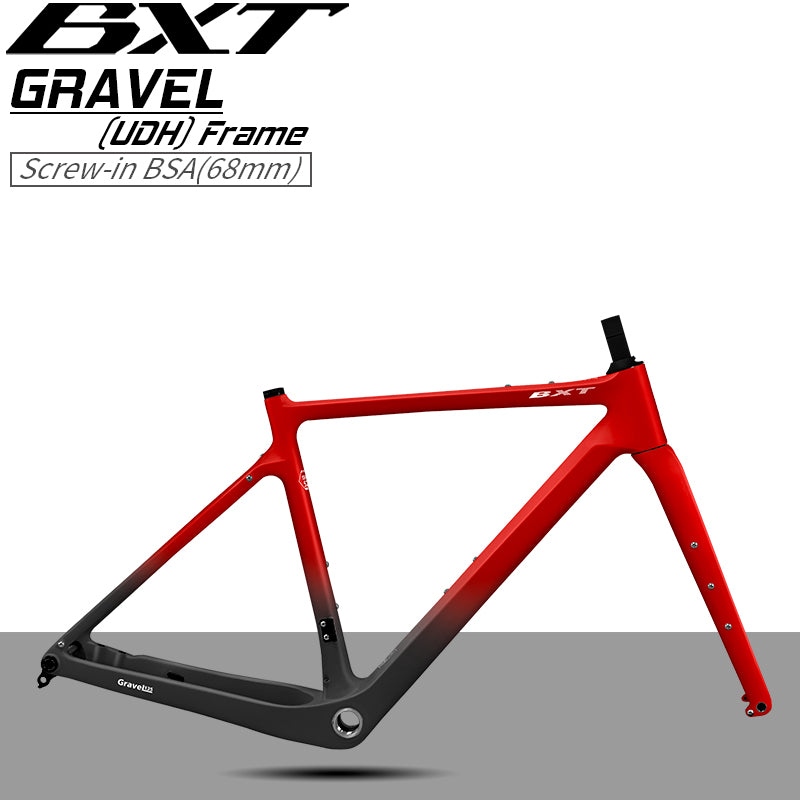
FrameThe reviewer builds up a BXT 135 gravel frame from AliExpress. He notes it uses a UDH derailleur hanger, a threaded BB68 bottom bracket rather than press-fit, and that he had to contact BXT support over a headset issue. The supplied 6.4 mm centering ring did not fit the stem properly, so BXT sent a 6.6 mm ring, after which the headset play could be adjusted correctly. He also mentions reading in forums that setting headset play on this type of frame can be difficult, and he is cautious not to damage the frame while tightening the bottom bracket.
AI Summary
Pros
- Threaded BB68 bottom bracket makes installation easier and requires no special press-fit tool
- Uses a UDH derailleur hanger
- BXT customer support offered several solutions, including the replacement centering ring that resolved the headset issue
Cons
- Original 6.4 mm centering ring did not fit the stem, preventing proper headset adjustment
- Forums suggest headset play can be difficult to eliminate on this type of frame
- Reviewer had to remove the entire handlebar to swap the centering ring
more cons in the video
Key Points
- Frame is the BXT 135 gravel frame
- Bottom bracket is BB68, threaded/screwed, not press-fit
- Bottom bracket tightened to about 45 Nm (spec 40-50 Nm)
more key points in the video

XCADEY Alpha 800
Bike-ComputersThe XCADEY Alpha 800 is an Android 8.1-based bike computer (2 GHz quad-core, 2 GB RAM, 32 GB storage, 2,500 mAh) priced from $159 at launch to $259. Its hardware is similar to a Hammerhead Karoo 2 at a fraction of the price. Owners praise the fast performance, excellent GPS (comparable to a Garmin Edge 850) and a Blanview screen readable in direct sun at 25% brightness. Battery use is about 5% per hour (roughly 20 hours), enough for most riders but short for bikepacking. Software is developing quickly and XCADEY now runs a Discord for bug reports and feature requests. Releases through November 2026 added: - heading-up map mode and notifications on the ride screen; - an XCADEY Store with Komoot, and installing external Android apps such as Spotify or GPS Test (v3.1.9); - companion apps for Android and iOS; - ClimbPro-style climb planning, graphical data fields and larger numbers (v3.1.12). It can charge while running. Remaining gripes are a still-maturing software base from a small company, no way to import your own workouts yet, and a wobbly fit in a third-party Garmin mount.
AI Summary
Pros
- Android-based operating system offers potential for custom apps and plugins, differentiating it from conventional bike computers.
- Blanview display is highly readable in direct sunlight even at only 25% brightness.
- GPS accuracy and lock are good, with no dropouts or issues reported during testing.
more pros in the review
Cons
- Battery life of about 20 hours is considered too short for bikepacking and multi-day rides.
- Android-based OS may inherently have lower battery life compared to purpose-built bike computer OSes.
- Software still maturing: features arrive quickly, but some basics such as importing your own workouts are missing.
more cons in the review
Key Points
- Android-based operating system
- Blanview display
- Battery life around 5% per hour or less (approximately 20 hours)
more key points in the review

Evolve CIMA GR
Frame
The reviewer presents the Evolve CIMA GR (referred to in the transcript as the Evolve GR Cima) as a new gravel frame from Evolve, positioned as a high-end, speed-oriented gravel bike that competes with top Western-brand frames at roughly half the price. He praises its build quality, hardware details, premium packaging, and sleek aesthetics, while raising concerns about the textured paint's cleanability, the 50c tire clearance being smaller than some competitors, and the lack of ceramic speed headset bearings. He weighs the frame, fork, seat post, and bars, and notes the frame is intended for fast gravel riding rather than exploration.
AI Summary
Pros
- High-end frame and bar package at $2,200 (frame, fork, handlebar, and seat post), roughly half the price of competitors that usually run $5,000–$6,000 for a gravel frame
- Build quality and attention to detail praised, including finishing of the bottom bracket, headset, brake mounting facing, and inclusion of extras
- Hardware is premium: titanium bolts, lightweight saddle clamps, and a carbon fiber part on the bottom
more pros in the video
Cons
- Textured 'Sahara Nude' paint has a rough, grainy feel and the reviewer is concerned it will be very hard to clean; a hand smudge was already visible
- Only 50c tire clearance front and rear, which the reviewer says is smaller than what people want and less than competitors around 57c
- Does not come with ceramic speed headset bearings like the road bike did; regular stainless steel bearings are used, which the reviewer would like to see upgraded for gravel use
more cons in the video
Key Points
- Frame alone retails for $1,999 ($2,000); adding a bar at checkout for $200 brings the total package to $2,200
- Carbon fiber blend of T800, T1100, and M40; claimed 750g unpainted frame weight
- Measured frame weight: 974g painted with all hardware in size ML
more key points in the video

Towild BL1500
Lights
The reviewer presents the Towild BL1500 bicycle light positively, highlighting its solid aluminum alloy build, 1500 lumen output, and innovative interchangeable mounting system that integrates with Garmin, Wahoo, and Bryton cycling computers. He particularly praises the adjustable light head with four downward positions, which allows quick beam angle changes to avoid dazzling other road users. While he notes the wireless remote is not personally necessary, he acknowledges its potential usefulness for others. The light also functions as an emergency power bank. The reviewer considers the launch price of around $80 (with discounts) reasonable, though he clarifies this is not a long-term review.
AI Summary
Pros
- Solid aluminum alloy build with excellent build quality
- Light output impresses with focused and wide beam options
- Interchangeable mounting system integrates with Garmin, Wahoo, and Bryton cycling computers
more pros in the video
Cons
- Wireless remote control not personally needed by reviewer; another small accessory on handlebars
- Battery life figures are manufacturer claims, not independently verified
- Not a long-term review; only initial impressions
Key Points
- Maximum output: 1500 lumens
- Battery: 3700 mAh, USB-C charging
- Water resistance: IPX8
more key points in the video
TAVELO Arden
Frame
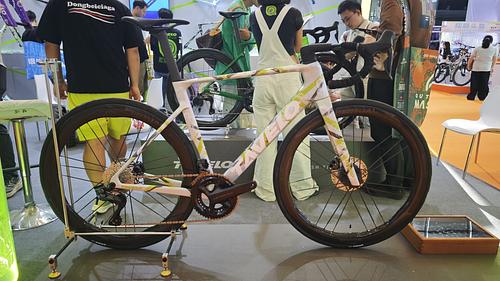
The reviewer presents the Tavelo Arden (also referred to as the Tubello/Tavello Arden) as a Chinese direct-to-consumer road bike costing roughly half the price of a Western brand like the Factor Monza, while offering nearly identical modern racing functionality. He describes it as very dynamic and stiff enough for sprints, comfortable enough to handle bad roads, and significantly lighter than the Monza by almost half a kilogram. He places its ride quality very close to the Monza on his spectrum of racing bikes. However, he criticizes its new riser handlebar for having a shortened 120mm drop and a tight bend that leaves no comfortable hand position when holding the bottom of the bars in a criterium, calling the idea good but the implementation crude and rushed. He notes Tavelo currently only sells frames, and recommends buying a Chinese frame as a way to save money.
AI Summary
Pros
- Costs about half the price of the Western Factor Monza for frame, fork, and handlebars
- Very dynamic and stiff enough for sprints
- Comfortable enough to avoid misery on bad roads
more pros in the video
Cons
- The new riser handlebar has only a 120mm drop, shorter than the standard 130mm, raising hands about 30mm higher than in the standard configuration
- The steep, tight bend of the handlebar leaves no comfortable place to put hands when holding the bottom of the bars in a criterium
- The handlebar idea seems good but the implementation is crude and rushed
more cons in the video
Key Points
- Frame, fork, and handlebars cost about half the price of the Factor Monza
- Nearly identical modern racing geometry to the Factor Monza
- Threaded bottom bracket
more key points in the video

10PLUS P Series for Road
Wheels
The reviewer presents the 10PLUS P Series road wheels as a newly released Chinese wheelset that could offer excellent value for money, highlighting their carbon spokes, ceramic bearings, and in-house manufacturing. He received the 50mm version, examines the build quality, packaging, and included accessories, weighs the wheels, and notes they appear to be a high-quality product, though he defers a final verdict until after riding them.
AI Summary
Pros
- Carbon spokes that are wider (4.5mm) than comparable Yoeleo spokes, which the reviewer views as a positive technical detail for power transfer
- Ceramic bearings available for a $50 premium, which the reviewer recommends over standard bearings
- In-house production by a company with over 10 years of experience and a 90,000 m² factory, keeping prices low by eliminating intermediaries
more pros in the video
Cons
- Weight is on the higher side at around 1.04kg measured (1,440g total), though the reviewer calls it a reasonable middle ground
- No spare carbon spokes included in the box, which the reviewer sees as a drawback
- Packaging arrived slightly damaged/broken, though the wheels themselves were fine
more cons in the video
Key Points
- Brand: 10PLUS, model P Series, newly released
- Reviewer tested the 50mm depth version (also available in 36mm and 65mm)
- Carbon spokes 4.5mm wide, made of Toray T700 and T800 carbon
more key points in the video
UpVine PRO+
Wheels
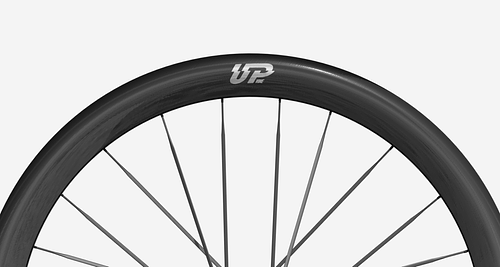
The reviewer tested the UpVine PRO+ wheelset, a high-end Chinese carbon wheel priced at $2,700. He was highly impressed with the ride quality, describing them as among the best wheels he has ever ridden, with excellent stiffness, stability, and compliance. However, he discovered a rear hub bearing issue on his 63mm test set, where excessive preload from the factory caused premature wear and resistance. A second 53mm set did not exhibit the problem. He considers the bearing issue unacceptable at this price point but still rates the wheels very highly overall.
AI Summary
Pros
- Among the best wheels the reviewer has ever ridden
- Direct and solid feel, particularly when sprinting out of the saddle
- Surprisingly stable in crosswinds for a deep rim
more pros in the video
Cons
- Rear hub bearings on the 63mm test set had excessive preload from the factory, causing resistance and premature wear on the drive-side bearing after only ~500 km
- Bearing issue considered unacceptable on a $2,700 wheelset
- Weight of 1,383 g is respectable but not the lightest for the money
more cons in the video
Key Points
- Price: $2,700
- Rim depth: 63mm tested, 53mm version also available
- Internal rim width: 25mm; external: 35mm
more key points in the video

Magicshine EVO 1700
Lights
The reviewer presents the Magicshine EVO 1700 Pro as one of three Magicshine lights tested over two months, noting its 1700 lumen maximum output and 4400 mAh battery. He praises its flat-cut light profile, simple one-button operation, included remote control, and its ability to pair the high beam with a taillight for single-button control. In his runtime test the EVO met or slightly exceeded its claimed 14-hour runtime, and he notes it offers a lower-output high beam mode (around 400 lumens) that can run essentially indefinitely while charging.
AI Summary
Pros
- Very good, flatly cut light profile that avoids dazzling others when set up properly
- Straightforward operation with a single button and an included remote control
- High beam can be paired with either light and simultaneously with the taillight for one-button on/off
more pros in the video
Cons
- Does not provide lux or candela figures, only lumen output
- Brightness decreases over time, likely due to overheating, with automatic step-down on high modes
- Brightness levels are reduced when charging and running simultaneously
more cons in the video
Key Points
- Maximum output of 1700 lumens
- 4400 mAh battery
- Charges at 2 amps
more key points in the video

Magicshine HORI 1300
LightsThe reviewer presents the Magicshine HORI 1300 Pro as one of three Magicshine lights tested over two months, with a 1300-lumen maximum output. He highlights its good light profile with a flat cutoff that avoids dazzling others, its simple one-button operation with a remote control, and its compatibility with ANT+ and Di2 connections. He notes its 3200 mAh battery and 2A charging, and reports that in his runtime test it far exceeded its claimed 6.5 hours on the lowest 200-lumen setting, lasting over 12 hours, though he attributes this to the light dimming its output over time. He also found the high beam lasted about 2.5 hours versus the claimed 2 hours.
AI Summary
Pros
- Very good, flat-cutoff light profile that avoids dazzling others when set up properly
- Simple operation with a single button and an included remote control
- Supports ANT+ and Di2 connectivity for control via bike computer or Dura-Ace buttons
more pros in the video
Cons
- Only 3200 mAh battery compared to the Evo's 4400 mAh
- Brightness decreases over time, likely due to overheating and automatic step-down
- When charging while running, it drops to a low-power 200-lumen mode after about 2.5 hours of high beam
more cons in the video
Key Points
- Maximum output of 1300 lumens; Magicshine does not provide lux or candela figures
- 3200 mAh battery
- Charges at 2A
more key points in the video

Magicshine SEEMEE 400
LightsThe reviewer discusses the Magicshine SEEMEE 400 rear light, noting its 400-lumen output is very high and likely unnecessary for a rear light. He has run it on the lowest non-blinking mode for a very long time across every test and found it held up extremely well, with runtime close to the stated 19 hours (around 20 hours possible). He highlights the Opti Tracing feature, where a small downward-facing light pulses and illuminates the rider's legs red, giving the bike dynamism on the road and letting the rider glance down to confirm the light is still on. He considers this his most-used mode and fully sufficient, questioning whether 400 lumens is needed since it can dazzle others, though it may suit fog or riders who dislike their companions. He also mentions the Magicshine app for iOS and Android, which connects to the lights and shows battery status and temperature, allows configuring modes, enabling/disabling motion activation and sleep mode, custom light levels, and performing firmware updates.
AI Summary
Pros
- Very long battery life, close to or exceeding the stated 19 hours (around 20 hours in non-blinking low-power mode)
- Opti Tracing downward pulse adds dynamism and lets the rider confirm the light is on by seeing red light on their legs
- Lowest non-blinking mode is more than sufficient for the reviewer's needs
more pros in the video
Cons
- 400 lumens is enormously bright for a rear light and likely unnecessary
- Such high rear output can dazzle others and may not be needed except in fog or specific situations
Key Points
- Model is the SEEMEE 400, with 400 lumens of output
- Stated battery runtime is 19 hours; reviewer got roughly 20 hours on the non-blinking low-power mode
- Has a downward-blinking Opti Tracing feature that illuminates the rider's legs red
more key points in the video
Towild BL1500
Lights
The reviewer received two Towild BL1500 front bike lights directly from the company for an honest review. He describes the light as having a maximum output of 1500 lumens, a unique built-in 32-degree tilt adjustment mechanism, IPX6 water resistance, a wireless remote control, and a Garmin-style mount. He demonstrates the various modes including daytime flash, nighttime flash, low beam, high beam, long-distance beam, and scattered/wide beam, both in a controlled setting and on the road at night. He praises the brightness, the tilt adjustment feature, and the remote control convenience, while noting that the advertised 50-hour runtime only applies to daytime flash modes and that the high beam mode requires adjusting the light angle to avoid blinding others.
AI Summary
Pros
- Maximum output of 1500 lumens is very bright
- Unique built-in 32-degree tilt adjustment mechanism allows angle changes without remounting
- IPX6 water resistance rating
more pros in the video
Cons
- Advertised 50-hour runtime only applies to daytime flash modes, not continuous beam
- Reviewer did not fully test battery capacity or battery life
- High beam mode shines very high and requires tilting the light down to avoid blinding others
more cons in the video
Key Points
- Maximum power output: 1500 lumens
- Built-in 32-degree tilt adjustment mechanism
- IPX6 water resistance rating
more key points in the video
Towild BL1500
Lights
The reviewer examines the Towild BL1500 bike light, describing it as a dual-source light system rated at 1500 lumens with a wireless remote, USB-C charging, and IPX6 water resistance. He notes it has three LEDs (not two), with one spot beam and two flood beams, and demonstrates the various modes, the wireless remote functionality, the quick-release mount, and the swappable battery. He tests it at night, praising the clear cutoff line, pleasant light spread, and the claimed 200-meter beam distance, and concludes it is a very good, multifunctional product.
AI Summary
Pros
- Dual light source with spot and flood beams
- 1500 lumens is more than enough
- USB-C charging with both USB-A to C and C to C cables included
more pros in the video
Cons
- Reviewer was initially unsure what the star-marked note on the runtime info meant
- Mount inserts look nearly identical with only minor differences, which is confusing
- Turbo mode does not list a runtime
more cons in the video
Key Points
- Model: Towild BL1500
- 1500 lumens output
- Three LEDs: one spot beam and two flood beams
more key points in the video