
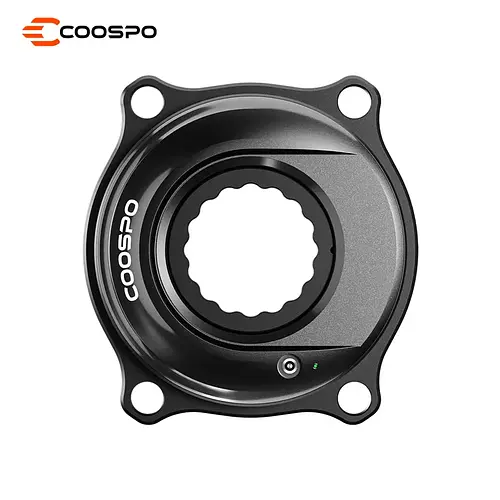

The COOSPO S10 Spider Power Meter offers an affordable entry into power-based training, with a lightweight carbon design and easy installation on 110 BCD cranks and Easton cranksets. However, independent tests and user reports consistently show accuracy discrepancies of 3–12% rather than the claimed ±1%, and some units suffer from data lag or drift. It is best suited for recreational riders and beginners, not for serious racers seeking precise data.
Pros
- Affordable price, typically under $150123
- Lightweight at approximately 100–101 grams124
- Easy installation using standard tools (same as square taper bottom brackets)124
- Compatible with Easton cranksets and 110 BCD chainrings124
- Good battery life, up to 300 hours12
- Consistent power readings for training and long rides152
- Measures power, cadence, left/right balance, and pedal smoothness2
- IPX7 waterproof and firmware updates via app1
Cons
- Accuracy discrepancy of 3–12% compared to reference meters, not the claimed ±1%123
- Noticeable data refresh delay and occasional data jumps42
- Not suitable for serious racers or those needing highly accurate data12
- Potential data drift after hard sprints2
- No software calibration or micro-adjustment capability2
- Instructions don't specify required tool size for installation2
- Suspected to be a rebranded Thinkrider PP5 with same firmware and issues3
- Issues acknowledged by Coospo but not fixed via firmware updates3
Key Facts
- Weight is approximately 100–101 grams for the power meter alone124
- Price ranges from $95 to $150 USD depending on source123
- Battery life is rated at up to 300 hours and charges magnetically124
- Compatible with 110 BCD 4-bolt chainrings and Easton cranksets124
- IPX7 waterproof rating1
- Requires 35–40 Nm torque for installation2
- Measured average power difference of about 3% (154 vs 160 W) and normalized power difference of about 3% (181 vs 186 W) compared to a reference meter1
- Interval differences range from 2.6% at 10 minutes to 12% at 5 seconds1
Sources
- 1Crank & SprintsCoospo S10 Spider Power Meter | Accuracy Test Results

- 2Patrick LinoI Tested the Coospo S10 Power Meter - $100 Budget Winner?
- 3ChinertownCoospo S10 - yet another Easton interface budget power meter spider
- 4Value WattsCoospo S10 Power Meter Review: The Budget King?

- 5Velocity PrintworksCheap Carbon Crankset and Power Meter, Ultralight Pump, etc.

Reviews & Ratings
15:02The reviewer mentions new cranks and a power meter, noting that the cranks are lighter than previous Rock Bros ones by about 30-40g, weighing around 287g for the crank arm. The power meter adds weight but has been fun to use, providing consistent power numbers that track with effort. They find it helpful for training and long rides to maintain a sustainable wattage.
08:43The reviewer found the COOSPO S10 Spider Bike Power Meter Easton to be an affordable entry into power-based training, praising its compatibility with Easton cranksets and lightweight design. He noted that it significantly improved his climbing endurance and overall training by providing real-time power data, though he experienced some data refresh delays and uncertainty about its consistency.
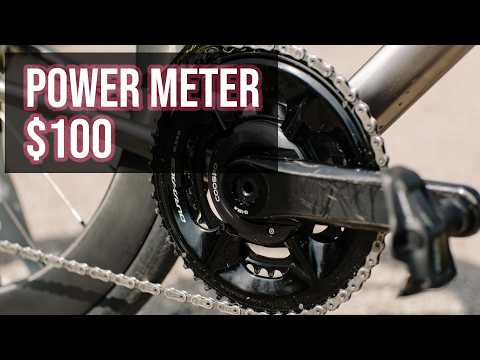
08:02The reviewer tests the Coospo S10 Spider Power Meter on a Shimano 105 crankset, highlighting its affordable price of under $150, solid carbon fiber build, and ease of installation. He measures accuracy against a reference power meter, finding about a 3% difference in average and normalized power, which he considers acceptable for the price. The reviewer concludes that the Coospo S10 is a great budget option for cyclists looking to start using a power meter, offering reliable data and good battery life.
17:28The reviewer tests the COOSPO S10 Spider Bike Power Meter, finding it to be a lightweight, affordable option suitable for recreational or new riders, but notes it consistently reads 5-8 watts lower than expected and doesn't meet its advertised ±1% accuracy claim.
The COOSPO S10 Spider Bike Power Meter Easton is a budget-friendly power meter priced around $95, with a claimed accuracy of 1%. Initial interest stemmed from Coospo's reputation in heart rate monitors, but independent testing by gplama revealed performance issues that were acknowledged by the company yet never addressed via firmware updates. It is suspected to be a rebranded Thinkrider PP5, sharing the same firmware and issues. Users generally advise to avoid this product until significant improvements are made.
AI Summary
Pros
- Very affordable price (~$95) makes it accessible
Cons
- Testing revealed issues with accuracy/reliability that were acknowledged but not fixed
- Suspected to be a rebranded Thinkrider PP5 with same firmware and issues
- Users have reported it as 'crap' and recommend avoiding
Key Points
- Price: $95 USD
- Claimed accuracy: 1%
- Tested firmware version: v1.0.7
more key points in the review
Use code MYBIKEPARTS (10% off) when ordering from COOSPO
MYBIKEPARTS (10% off)Where to Buy
COOSPO ⭐️S10 Spider Power Meter for Easton Cinch Crankset
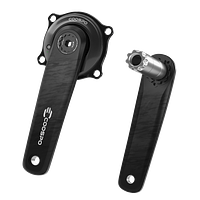
COOSPO ⭐️S10 Spider Power Meter with Crankset(Easton)
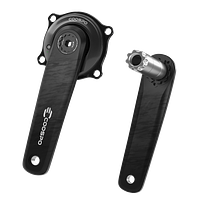
COOSPO ⭐️S10 Spider Power Meter with Crankset(Easton)
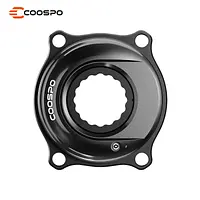
COOSPO S10 Spider Bike Power Meter Easton 110 BCD 4-bolt High-Precision for Road Bicycle Lightweight

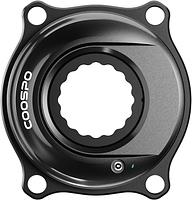
CooSpo S10 Leistungsmesser Spider für Easton 110 BCD 4-Arm Kurbel – Beidseitig präziser Leistungsmesser, Bluetooth/ANT+ Kompatibel, Power Meter Cycling für Rennrad & Mountainbike

Variants
| Configuration | Sold as | Crank Material | Weight | Price |
|---|---|---|---|---|
| Aluminium Crankset | Complete crankset | Aluminium | — | $274.89 - $439.89 |
| Carbon Crankset | Complete crankset | Carbon | 453g | €345.90 |
| Spider only | Sensor only (no cranks) | None (no cranks) | 102g | £92.54 |
Specifications
Attributes
Spotted an error in the specs? Help us correct it — sign in or create an account.
Questions about COOSPO S10 Power Meter Spider & Crankset (Easton Cinch)
Sign up and share your experience — help other riders decide!
Create Account & Review